William Lenche of Birmingham
The first of his name relating to Birmingham was John de Lenche, noted in a legal document from 1262 concerning the lord of the manor. This was a period when people other than barons and knights were adopting hereditary surnames, a trend especially noticeable amongst merchants, craftsmen, traders, and the prosperous in general.
Significantly, last names connected to places provide direct evidence of migration to mediaeval towns because those incomers were identified by whence they came. So, John was of (de) Lenche, hailing from the Vale of Evesham in Worcestershire where there are five villages so called. His type of surname was common in late thirteenth-century Birmingham, with most connected to places now within the city’s boundaries or within a 10 mile radius of its centre. However, the pull of the town was shown by a considerable proportion of migrants coming from further west in Staffordshire and Worcestershire, with the Lench villages over 30 miles distant.
It wouldn’t seem that de Lenche was pushed to move by poverty as his family were the lords of the manor of what became Rouse Lench. Instead, it’s likely that he was a younger son seeking to make his own mark. If so, he did just that as the 1262 source also gives him as a juror at the Warwickshire Eyre, a temporary law court with justices sent out from the central courts in Westminster. Jurors like him were freeholders and usually the leading men in their district. In Lenche’s case, this was the Hemlingford Hundred part of the county, covering modern Birmingham, Coventry, Solihull, and much of North Warwickshire.
With no one called Lenche mentioned in the Borough Rentals of 1296 and 1344-45 for Birmingham itself, it seems that John de Lenche was a property owner in Aston, as in 1346, a Robert de Lenche was mentioned in a land document relating to that large and then separate manor. Fifty years later, a William Lenche was recorded as of Duddeston, another manor that would also become part of Birmingham. It’s apparent that the Lenche family extended its holdings as the 1471 will of another William noted lands and tenements (buildings) in Saltley, Bordesley, Nechells, Little Bromwich, and Handsworth – all then outside Birmingham.
William’s son, John, did even better, going on to own property in Birmingham, where he became a leading citizen. In 1451, he and his wife, Isabella, were registered as members of the prestigious Guild of St. Anne of Knowle. Then in 1483, he was given as of ‘Dereyatyende’ (Deritend), Birmingham’s first suburb, although it was in Aston when he became Master of the Guild of the Holy Cross of Birmingham .This was the most prominent position in the town.
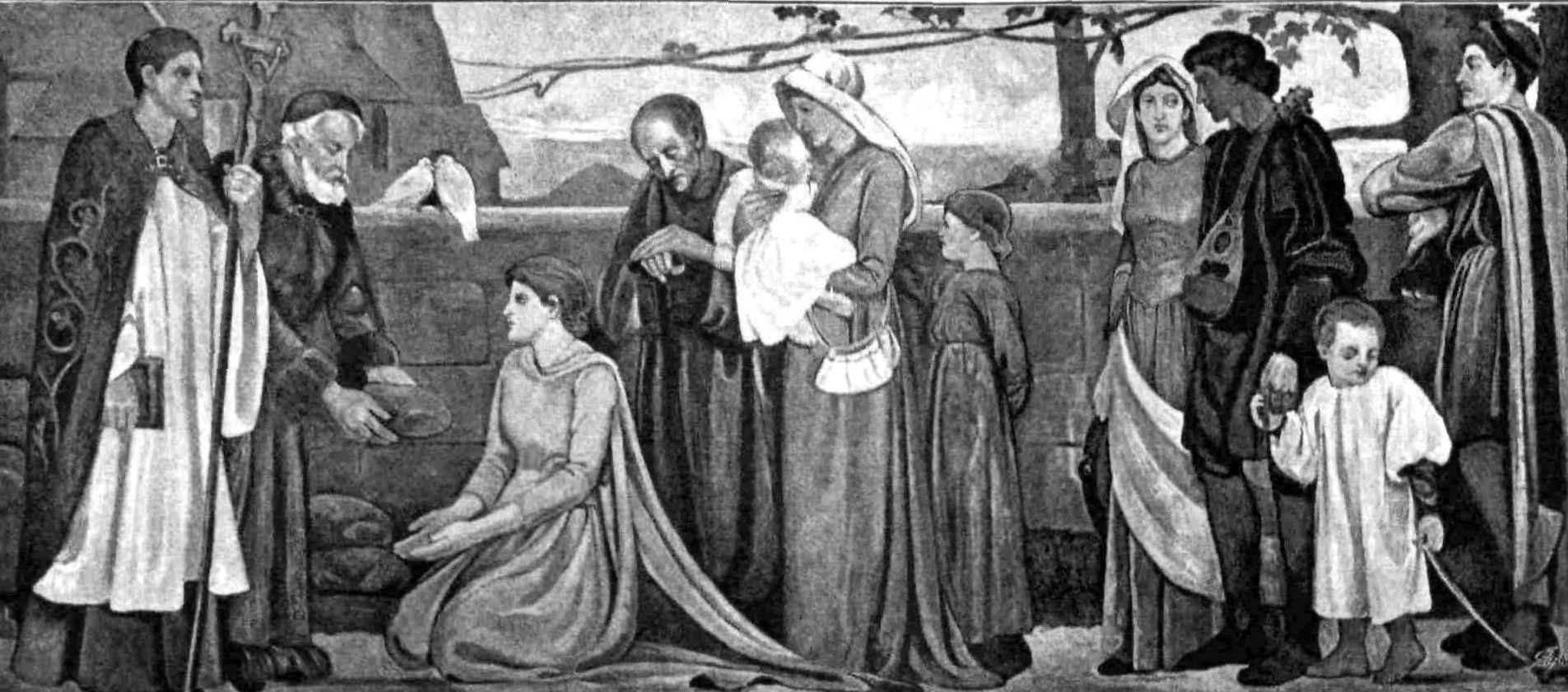
This depiction of the Distribution of the Dole by Kate E. Bunce is one of
several panels in Birmingham’s Town Hall.
As noted in 1487, his brother, Henry Lenche of ‘Byrmyngeham’, was the father of William Lenche who endowed the Trust. Deeming himself also of Birmingham, William was obviously an astute businessman making his money through interconnected enterprises which he controlled: buying and grazing cattle; butchering them and selling the meat; and tanning their hides for leather workers.
A generation before, William Lenche was one of them and like others, he sold meat, as in 1520 he was called a ‘bocher’, butcher. He would have employed someone to do so in The Shambles, that part of the Bull Ring where the butchers gathered. This was probably his servant, William Paynton, who was later recorded as having a shop there and, elsewhere, also leasing houses with crops, barns, and pastures from Lenche’s widow.
Tanning was a labour-intensive operation, although it’s not known how many men William Lenche employed, probably at the tannery in Deritend. What is known is that like most other wealthy Birmingham traders, he bought property to add to that he’d inherited.
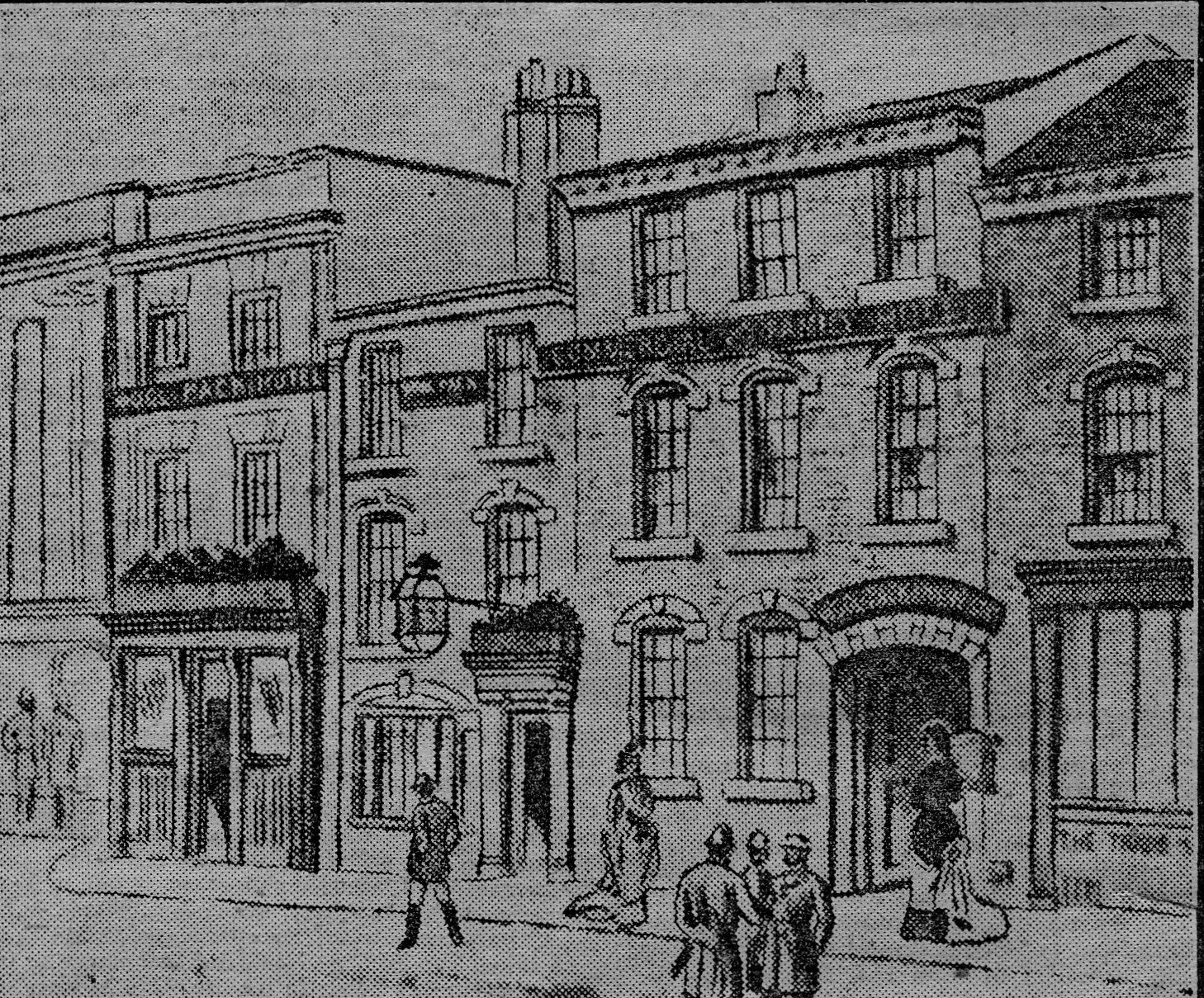
In 1487, he took over a house in ‘Moulestreet’, Moor Street, paying the lord of the manor an annual rent of a pound of pepper, an expensive item and signifier of wealth in the Tudor period.
Six years later, Lenche purchased an adjoining croft, a small piece of land. This extended to ‘lytyll park street’, Park Street, where later the Lench’s Trust would have almshouses. Lenche himself lived in the house, partly on the site where the Woolpack Hotel would be built. As well as adding to his property in Moor Street, he bought land near the Bull Ring and in 1506, he gained the ‘Calofeldys’ (Callowfields) in Bordesley, then outside Birmingham, from a cousin.
What kind of man was William Lenche, other than a wealthy and clever businessman? There’s no description of him but it’s apparent that even though he lived in a religious age, his faith was deep and meaningful. His will of 24 March 1525 began as did all others with bequeathing his soul to almighty God, adding to “our blessed seynt Mary, and all the holy company of heaven”. Then he left money to St. Martin’s, where he was to be buried, for making his sepulchre; to the priests present at his committal; to the church’s High Altar; and to the priests who would pray for his soul thereafter. His religiosity was further emphasised by bequests to St. Mary’s Priory and Cathedral in Coventry and to St. Chad’s in Lichfield.
Having no children, Lenche bequeathed money to each of his unnamed godchildren and the residue of his estate to his wife, Agnes. Apart from this brief mention and others pertaining to her husband, she’s lost in the shadows of history, although she must have been a capable woman as she was her husband’s sole executor. Lenche’s will also included a small sum for repairing the pavement of Edgbaston Street. Thirteen days previously, on 11 March 1525, his Declaration of the Intent of Enfeoffment made his generosity and concern for Birmingham and its people even clearer. It stated that after his death and that of his wife, his Trustees should use the income from his estates to distribute in “warke of charyte” for the health of the souls of the couple. Written in English, this was the foundation for the charitable work of Lench’s Trust.